Ruts After a Wet Harvest: How Not to Lock In Next Year’s Potato Yield Losses
Հիմնական ճարպերը
- 13 of 16 AHDB trials showed yield loss from compaction
- 18 t/ha average loss on compacted soil against 54 t/ha
- 28 of 83 subsoiling trials raised potato yield in AHDB
- 1.5–2 cm a day: root growth in loose soil after emergence
Ինչու է դա կարեւոր
- Ֆերմերների համար
- Dig soil pits before subsoiling, work only on dry soil, avoid ploughing waterlogged fields and clear drains this autumn.
- Մատակարարների համար
- Offer soil structure checks and penetrometer surveys, not only subsoiling passes.
60 վայրկյան տևողությամբ ամփոփում
A rainy harvest forces heavy machines onto soft ground, and the damage lasts beyond this season. In an AHDB review of 16 experiments, 13 showed a significant yield drop on compacted soil, on average 18 t/ha from a loose-soil mean of 54 t/ha. The young crop suffers most: roots that extend 1.5–2 cm a day in loose soil slow down sharply when a dense layer lies under the seed. Symptoms such as patchy emergence, weak canopy and wilting in moist soil are easily blamed on seed or disease. Deep loosening is no sure cure either: only 28 of 83 published trials gave a significant yield gain, three lowered yield, and typical gains were around 5 t/ha. AHDB advises spade pits and a structure score before any pass, loosening only to the damaged depth and only when a ribbon test shows the soil is dry enough. Fresh ploughing of waterlogged land can make spring conditions worse, and drains need checking now.
Digging in waterlogged soil solves this season’s problem but leaves a bill for the next. Heavy harvesters, tractors and loaded trucks move slowly across wet fields, often with wheel slip, and compact the soil below the plough layer. For potatoes, one of the crops most sensitive to soil structure, this legacy can cost a large part of the next crop.
What compaction costs
The UK Agriculture and Horticulture Development Board (AHDB) reviewed 16 experiments that compared potato yields on compacted and loose soil. In 13 of them, compaction reduced yield significantly. The average loss was 18 t/ha against a mean yield of 54 t/ha on loose soil, and in some experiments losses reached 25–38 t/ha. Potatoes are most vulnerable in the first 3–4 weeks after emergence: in loose soil, roots grow 1.5–2 cm a day, and a dense layer just below the seed tuber sharply slows them. According to AHDB, the effects of compaction last the whole season and, once created, are almost impossible to remove completely.
Ինչպես ճանաչել խնդիրը
Compaction is easy to confuse with other causes of yield loss. AHDB lists typical signs: uneven emergence, slow canopy growth, wilting leaves when the soil is moist, nutrient deficiency symptoms and more misshapen tubers. So before any deep cultivation, specialists advise a field diagnosis. Dig a soil pit with a spade in several places and assess soil structure (the Visual Evaluation of Soil Structure, VESS), adding a penetrometer where possible.
Աշխատանքային օրերին։ Հրաժարվեք բաժանորդագրությունից մեկ սեղմումով։
Subsoiling is not a universal answer
Subsoiling after a wet harvest seems the obvious fix, but the data are mixed. Of 83 published subsoiling experiments in potatoes reviewed by AHDB, only 28 gave a significant yield increase, and three gave lower yields. Even where soil resistance fell measurably, the yield gain was often small, about 5 t/ha.
AHDB gives these practical rules for soils after prolonged waterlogging:
- Subsoil only where compaction is confirmed by a soil assessment, and only to the depth of the compacted layer.
- Check soil moisture at working depth before any work (a simple ribbon test). In wet soil a subsoiler smears the layer instead of shattering it.
- Do not plough straight after waterlogging: worked soil takes in more rain, and seedbed conditions can become worse by spring.
- Keep traffic to a minimum and stay off the field until the soil has dried.
- Inspect and clear field drain outfalls and ditches in autumn.
What to do with low spots
Waterlogged hollows, where machines get stuck and part of the crop is lost, are a separate question. Canadian specialists advise leaving areas with signs of rot unharvested, so that infection does not reach the store. In the long term, such areas need levelling, drainage or a decision on whether to plant potatoes there at all.
Ինչու է դա կարեւոր
In a season of long rains, the goal is to lift the crop before frost, and some compaction is almost unavoidable. But decisions on how to restore the field are made in autumn and set the starting conditions for next year’s potatoes. Targeted diagnosis and work on dry soil cost less than blanket subsoiling by the calendar, or losing a third of the crop on compacted patches.
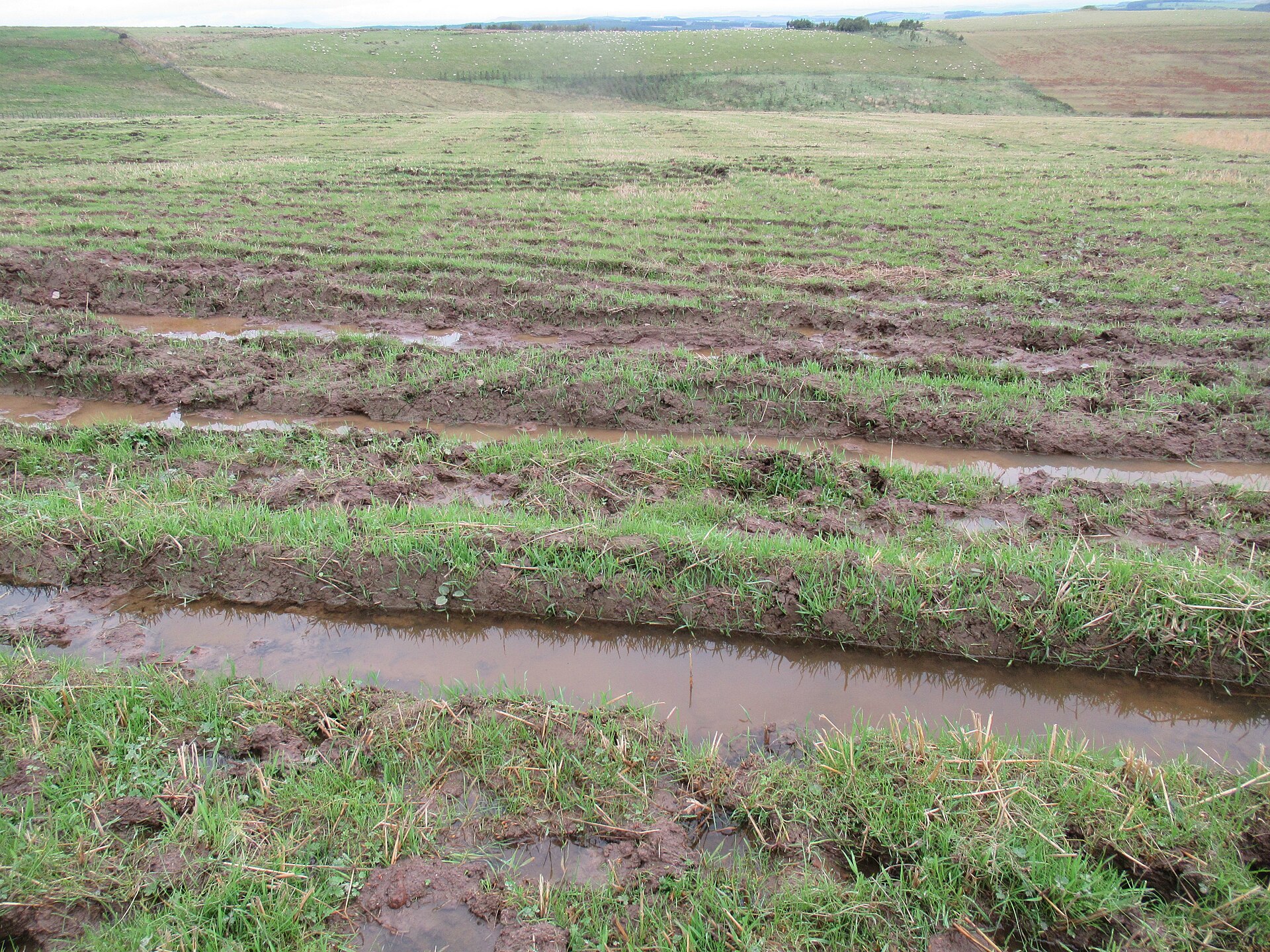
Photo: Water-filled tractor ruts in a field near Falla, Scotland (illustrative). ian shiell / Wikimedia Commons, CC BY-SA 2.0
Գլոբալ կարտոֆիլի համառոտ նկարագրություն
Հինգ լավագույն նորություններ, գներ, հիվանդությունների մասին ահազանգեր և միջոցառումներ: Աշխատանքային օրերին առավոտներ, առանց գովազդի:
Ինչ հաջորդ
Field recovery plans are set this autumn: diagnosis first, then subsoiling only where it is needed and when soil is dry enough.
Աղբյուրներ
- MAX chat «КАРТОФЕЛЬ И Т.Д. (կարտոֆիլ և այլն)» — https://max.ru/join/SViX6IyOKuJHB6-xuuepbMbts_zk4eiEYdXUpUWVu28
- AHDB — Review of the effect of soil compaction on potato growth and its removal by cultivation — https://potatoes.ahdb.org.uk/effect-of-soil-compaction-on-potato-growth-and-its-removal-by-cultivation
- AHDB — How to manage soils after prolonged waterlogging — https://ahdb.org.uk/news/how-to-manage-soils-after-prolonged-waterlogging
- Potato News Today — The invisible yield tax beneath the rows — https://www.potatonewstoday.com/2026/08/17/the-invisible-yield-tax-beneath-the-rows-why-soil-compaction-belongs-on-every-potato-businesss-risk-register/
- Սպադ Սմարթ — Բարձր խոնավության պայմաններում կարտոֆիլի բերքահավաք և պահպանում — https://spudsmart.com/harvest-and-storage-of-potato-crops-exposed-to-high-moisture-levels/
Հղում այս նյութում
- Երկիր
- Աշխարհ
- Բաժիններ
- ԱգրոնոմիաՄաքրությունՆորություններ
Առնչվող պատմություններ

Կալիումի քլորիդը աշնանը. երբ վարելուց առաջ կիրառումը պաշտպանում է կարտոֆիլի բերքատվությունը և օսլան
Գլոբալ. Կարտոֆիլի պսիլիդը լավագույնս զարգանում է մոտ 27°C ջերմաստիճանում և կարող է մի քանի ժամվա ընթացքում փոխանցել զեբրա չիպը։